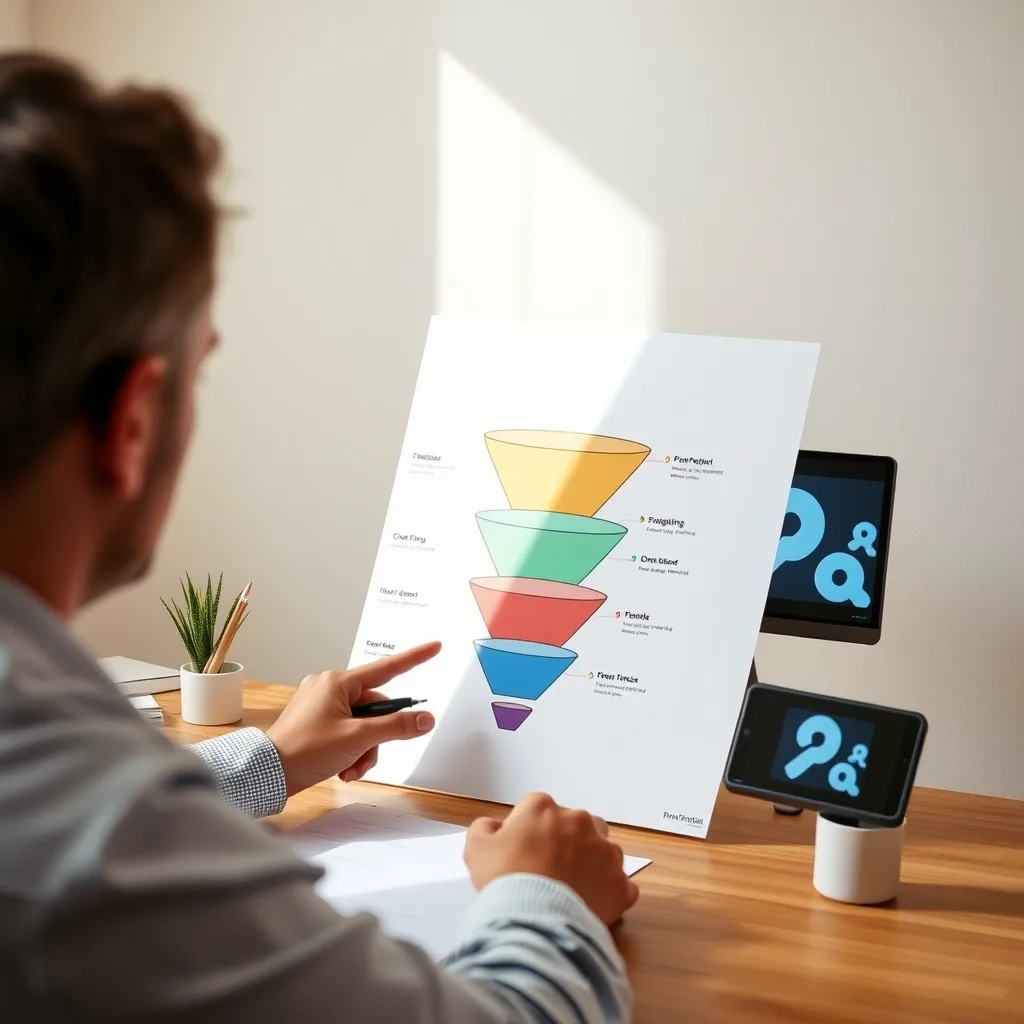
A sales funnel is a short path that moves a visitor from "just looking" to a specific action, usually joining an email list or buying. There are only a handful of common types. The hard part is choosing the one that fits what you sell and how much traffic and time you have. This guide covers each type, the trade-offs, and which to build first. Funnel mechanics are covered more broadly in Sales Funnels & Website Building.
The Short Answer
If you are new and have no audience, build a lead capture funnel first. If you already have an email list or people asking to buy, build a direct sales funnel. Skip webinar and multi-step funnels until one simple funnel has worked at least once.
The Main Funnel Types Compared
| Funnel type | Pages involved | Best for | Main trade-off |
|---|---|---|---|
| Lead capture | Opt-in page, thank-you page, email follow-up | Building an audience from zero | No revenue until you sell through email |
| Direct sales | Sales page, checkout, confirmation | Low-cost products to a warm audience | Cold visitors often need more convincing |
| Tripwire / low-cost offer | Opt-in, small offer, checkout, follow-up | Turning subscribers into buyers | Needs a second, bigger product to matter |
| Webinar | Registration, session, offer, replay | Higher-priced or complex offers | Most work: content, scheduling, follow-up |
| Product launch / sequence | Several content pieces, then a sales page | Time-limited launches to an existing list | Needs an audience and careful planning |
Funnel Types in Detail
1. Lead Capture Funnel
A visitor lands on a page, trades an email address for something useful (a checklist, a short guide, a mini-course), and gets a thank-you page. Then an automated email sequence starts.
- Good: Simple, quick to build, and gives you an audience you own.
- Not so good: It earns nothing by itself. The emails matter as much as the page, and writing them takes effort.
2. Direct Sales Funnel
A sales page leads straight to checkout. It suits products where the buyer already understands the value. If you are unsure how this differs from an opt-in page, see the difference between a landing page and a sales page.
- Good: Fewer steps and faster feedback on whether the offer sells.
- Not so good: If a visitor is not ready, you lose them and have no email address to follow up.
3. Tripwire Funnel
This starts like a lead funnel, then presents a small, inexpensive offer right after sign-up. Order bumps and upsells can add to it; the setup is explained in setting up a checkout flow with order bumps and upsells.
- Good: Separates buyers from browsers early.
- Not so good: The small offer rarely pays for traffic on its own, and extra steps can feel pushy if overdone.
4. Webinar Funnel
Visitors register for a live or recorded session, then see an offer at the end. Systeme.io can support this style; see whether you can build a webinar funnel in Systeme.io and check the official site for what is currently included.
- Good: Lets you explain complex or higher-priced offers.
- Not so good: You must create the presentation, handle no-shows, and follow up. Not a first project.
 Recommended for youSysteme.io Funnel Builder Review: Templates, Page Editor and Real Limits
How to Choose: Four Questions
- Do you have an email list? No: start with lead capture. Yes: try a direct offer to that list.
- What is the price and complexity of the offer? Low and simple suits a direct sales page. High or unfamiliar usually needs more explanation, through email or a webinar.
- Where will traffic come from? Cold traffic (strangers) usually needs a lead step first. Warm traffic (followers, customers) can go straight to a sales page.
- How much time can you spend? Pick the simplest funnel you can finish. A live funnel beats a perfect plan.
Build Your First Funnel: Practical Steps
- Write one sentence: "This funnel helps [specific person] get [specific result] through [offer]."
- Pick one type from the table above.
- Start from a template rather than a blank page. This template guide explains how to choose and customize one.
- Build the pages. The full walkthrough is in How to Build Your First Sales Funnel in Systeme.io. For a sales page, use this sales page guide.
- Test the whole path yourself: submit the form, receive the email, and run through checkout.
- Consider a custom domain once the funnel works. See connecting a custom domain.
- Send a small amount of traffic, watch where people drop off, and change one thing at a time. If you want to compare versions, read whether you can A/B test pages in Systeme.io.
Honest Limits to Keep in Mind
- No funnel type guarantees sales. Results depend on your offer, audience, and traffic.
- Free plans usually have caps. Check free plan funnel and page limits and confirm current details on the official Systeme.io site.
- Any builder has trade-offs in design flexibility and features. Read the funnel builder review for templates, the editor, and real limits before committing. If you also need a basic business site, the website builder review covers that side.
Where to Go Next
Choose one funnel type, build it this week, and learn from real visitors. If you are still deciding whether Systeme.io is the right tool, start with the funnel builder review, then follow the step-by-step build guide.
Keep reading
 Systeme.io Website Builder Review: Can It Run a Simple Business Site?Short answer: Systeme.io can probably run a simple business site if your goal is to explain what yo…
 How to Build Your First Sales Funnel in Systeme.io, Step by StepA sales funnel in Systeme.io is a series of connected pages that move a visitor toward one action,…
 How to Build a Sales Page That Converts in Systeme.ioA sales page has one job: help the right person decide whether to buy, without confusing or pressur…