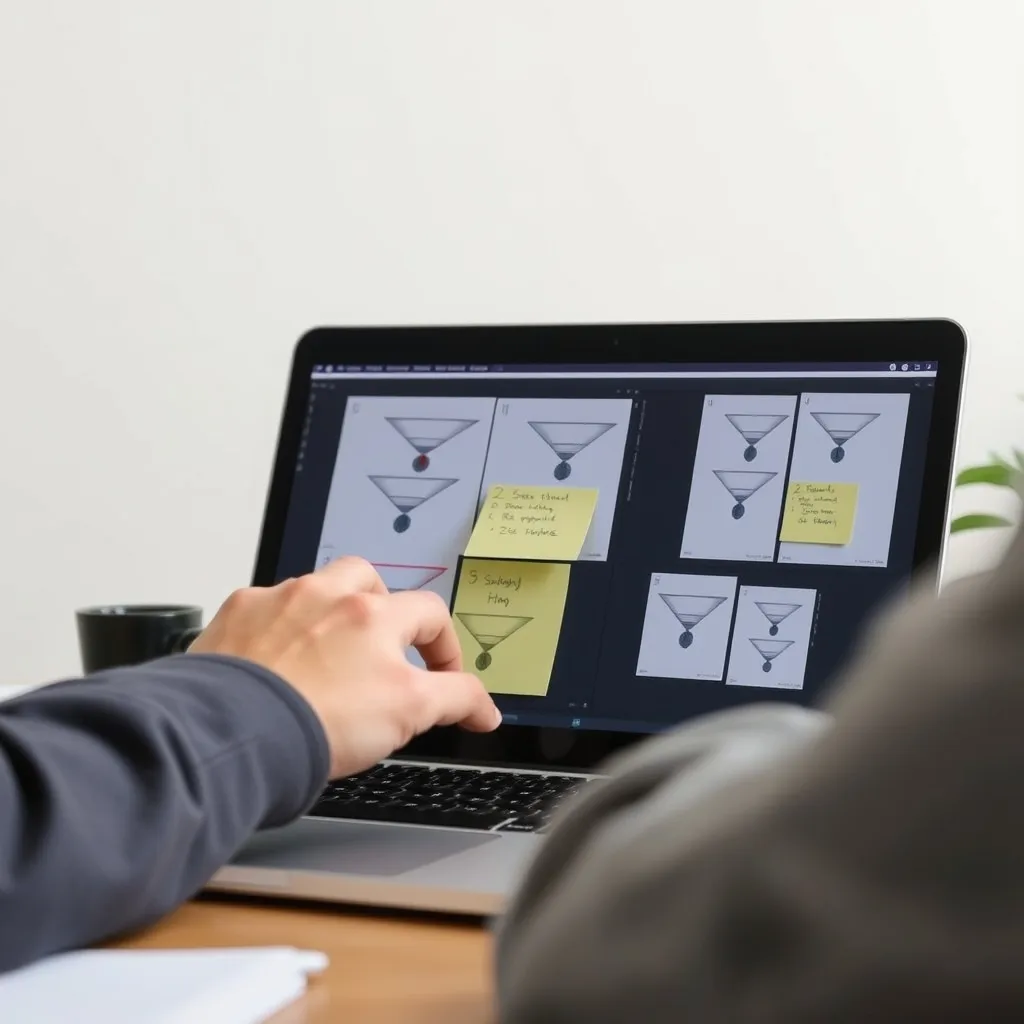
If you promote other people's products, you need three things: a page that captures email addresses, a way to send emails, and a way to see which links earn money. Systeme.io bundles page building, email and some selling tools in one account, so you may not have to stitch together separate services. This guide covers how an affiliate marketer might use it, where it fits, and where it may not. Features and pricing change, so confirm current details on the official site at systeme.io before you commit.
What "all in one" means for an affiliate
An affiliate setup usually has four parts:
- A capture page offering something useful (a checklist, a short guide, a mini-course) in exchange for an email address.
- An email sequence that delivers the freebie and then recommends products.
- Your affiliate links, placed in emails or on pages.
- Some way to measure what is working.
Systeme.io is designed to cover the first two parts in one dashboard. Be clear about the third and fourth: your affiliate links and commissions are tracked by the program you promote, not by your funnel tool. Your funnel tool can show opens, clicks and subscribers, but the money lives in each merchant's affiliate dashboard.
Two different things people mean by "commission tracking"
1. Tracking your own earnings as an affiliate
You will check each merchant's affiliate portal for clicks, sales and payouts. A simple spreadsheet that lists each program, link, and where you placed it is still worth keeping. Don't assume any single tool will merge them for you.
2. Running an affiliate program for your own product
Systeme.io has an affiliate feature for people selling their own products. Check the official site for what it supports and how it is configured. This is separate from earning commissions by promoting its program, which is covered in Systeme.io Affiliate Program: Commission Rates, Payout Timing and How to Join.
Step-by-step: a simple affiliate funnel
Step 1: Pick one narrow audience and one problem
Broad funnels convert poorly and are hard to write for. Before building anything, test whether anyone wants what you plan to offer. How to Validate an Online Business Idea Before You Spend Money walks through this. If you are still choosing a model, see Best Online Business Models for Beginners.
Step 2: Choose products you can honestly recommend
Read the program's terms first. Some programs restrict how links may be used, such as in paid ads or email. Use only products you have researched, and disclose affiliate relationships. Disclosure rules vary by country, so check the requirements where you and your audience live, and consult a legal professional if unsure.
Step 3: Create a lead magnet
Keep it small: a one-page checklist or comparison that solves one narrow problem. A short, useful freebie beats a long, vague one.
Step 4: Build the capture page and thank-you page
In the funnel builder, create a page with a headline, a few bullet benefits and a signup form. Connect the form to a list or tag so new subscribers get the right emails. Send a test signup with your own address and confirm the delivery email arrives.
Step 5: Write a short email sequence
- Email 1: deliver the freebie and set expectations.
- Email 2: share a useful tip related to it.
- Email 3: tell a problem-and-solution story, with an affiliate link and a plain statement that you may earn a commission.
- Email 4: answer common objections and mention drawbacks of the product honestly.
Step 6: Track and adjust
Use a unique link or tracking parameter per placement where the program allows it. After a few weeks, compare your funnel's signup and click numbers with the merchant's reports. Change one thing at a time. Small lists produce noisy data, so avoid big conclusions from a handful of clicks.
 Recommended for youHow to Start an Online Business on a Budget: A Realistic Cost Breakdown
Honest trade-offs
| Consideration | One all-in-one tool | Separate specialist tools |
|---|---|---|
| Setup | One login, fewer connections to maintain | More integrations to configure |
| Depth | May be less advanced in any single area | Often deeper features per tool |
| Cost | Often easier to predict, but check limits | Several bills that can add up |
| Switching | Moving later takes effort | Easier to swap one piece |
For a deeper look, read All-in-One Platform vs Best-of-Breed Tool Stack and Hidden Costs of All-in-One Platforms. If you are weighing it against a free-tool setup, see Can you run an entire online business on free tools?
Where it may fall short
- You will still depend on each merchant's reporting for commissions.
- Advanced design or automation needs may exceed what a bundled tool offers. Test with the plan you intend to use.
- Plan limits, such as contacts or emails, can change. Check the pricing page rather than relying on old articles.
- Email deliverability depends mostly on your list quality and sending habits, not only the tool.
Do you need a separate website?
Not necessarily. A funnel with a capture page can work as your starting point, though a blog or content site helps some strategies. See Do you need a website to start an online business?
Keeping costs low
Affiliate marketing is cheap to start but not free of cost: you pay in time, and possibly for a domain and tools. For realistic figures, see How to Start an Online Business on a Budget, Best Budget Tool Stack for a New Online Business, and Can you start an online business with no money? If you already have tools elsewhere, read How to Migrate Your Online Business to an All-in-One Platform Without Downtime.
Is it right for you?
It is a reasonable fit if you want fewer moving parts and are starting with a simple funnel and email list. It is a weaker fit if you need advanced features in one specialty area. No tool guarantees traffic, sales or income; results depend on your offer, audience and consistency. For the broader picture, start with Affiliate Marketing & Online Business Setup, then check the current plans and features on the official Systeme.io site before deciding.
Keep reading
 Best Online Business Models for Beginners: Affiliate, Digital Products, Coaching and ServicesMost beginners don't fail because they picked the "wrong" business model. They fail because they pi…
 How to Validate an Online Business Idea Before You Spend MoneyMost failed online businesses don't fail because the owner worked too little. They fail because nob…
 Best Budget Tool Stack for a New Online Business: What to Buy, What to SkipA new online business needs fewer tools than most software ads suggest. For most beginners, the bud…